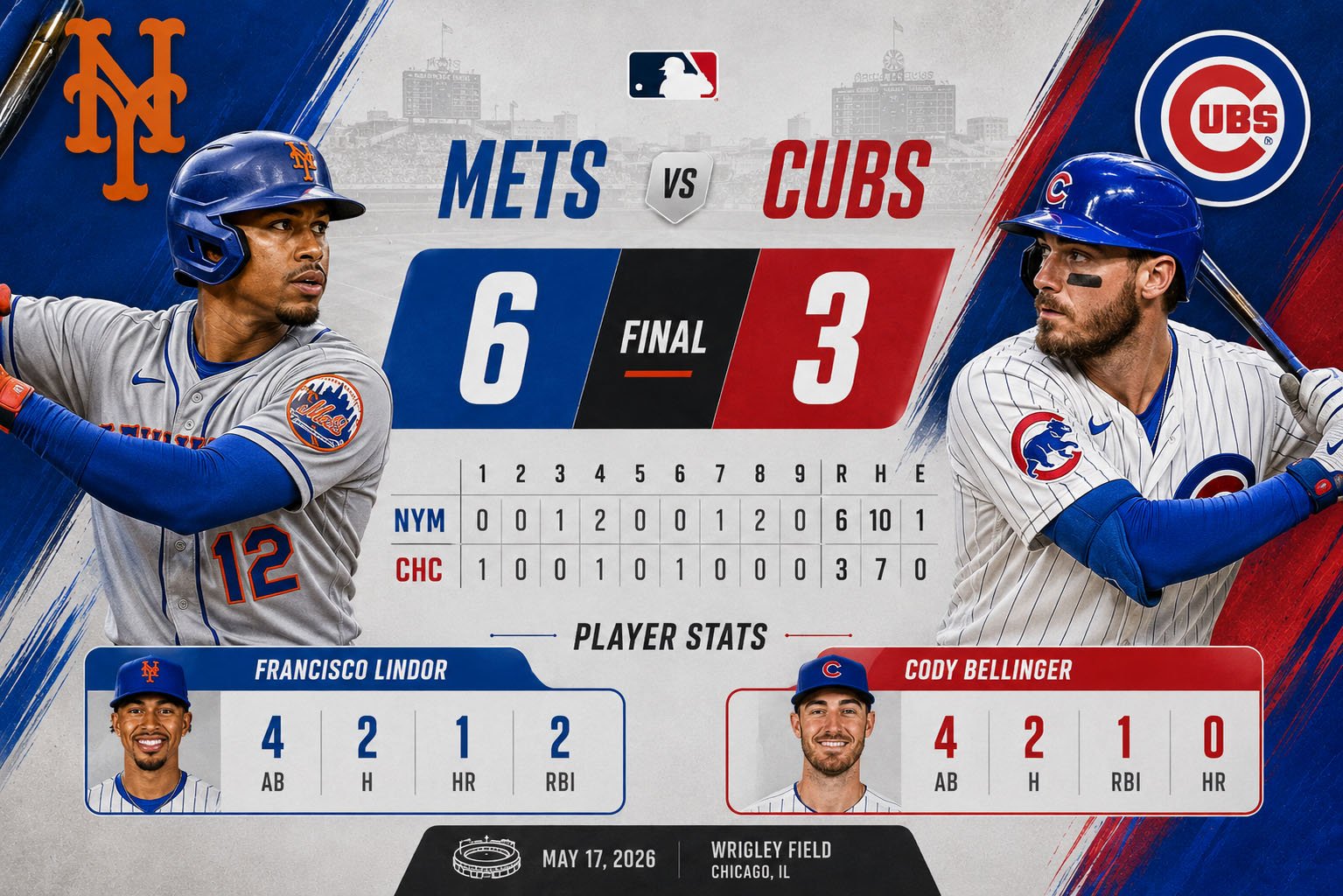
New York Mets vs Chicago Cubs turned into one of the most entertaining series of the 2025 stretch run, with both teams fighting for postseason positioning in the season’s final weeks. Over a three game set at Wrigley Field in late September, the two clubs traded dramatic comebacks, milestone performances, and momentum swings that carried real playoff implications for both the National League wild card race and Chicago’s push atop the standings.
This article breaks down that pivotal series, the top individual performances from both rosters, and what the head to head results revealed about two teams built very differently for a postseason push. Every stat below comes from official box scores and season reports.
Quick Team Snapshot
| Team | Series Result | Playoff Position | Key Storyline |
|---|---|---|---|
| Chicago Cubs | Won 2 of 3 | NL wild card leader | Ended a 5-game skid |
| New York Mets | Won 1 of 3 | Fighting for wild card | Historic comeback win |
Chicago took the series behind a dominant middle game, while New York’s lone win included the club’s largest comeback of the entire season, a fitting summary of just how much this series swung back and forth.
New York Mets Key Player Stats
Francisco Lindor: A 30-30 Season for the Ages
Shortstop Francisco Lindor authored one of the signature individual storylines of this series, launching a leadoff home run in the series finale to reach the 30 home run, 30 stolen base milestone for the second time in his career, a feat previously accomplished by only Howard Johnson and Darryl Strawberry in Mets franchise history, both in 1987. That home run capped a series where Lindor factored into nearly every key offensive moment for New York, including a go ahead RBI single in the series opener that briefly gave the Mets a 7-6 lead.
Lindor’s power surge continued throughout the series finale, finishing with a home run that pushed his season total to 31 while driving in three runs to raise his RBI total to 84 on the year. His combination of power, speed, and clutch hitting throughout this series reinforced his standing as the engine of New York’s lineup during a stretch when the Mets desperately needed their best player to perform at his highest level.
Francisco Alvarez and New York’s Historic Comeback
Catcher Francisco Alvarez delivered the signature moment of the entire series, hitting a tiebreaking two run homer in the eighth inning of the series opener to cap New York’s largest comeback win of the season after the Mets had trailed 6-1. That dramatic rally, punctuated by Brandon Nimmo’s three run homer that tied the game in the fifth inning, showed the kind of late game resilience that kept New York in playoff contention throughout the season’s final stretch.
Alvarez added another home run in the series finale, giving him multiple long balls across the three game set and reinforcing his development into a legitimate power threat in New York’s lineup. His performance behind the plate and at bat throughout this series highlighted the kind of two way catching value that had become increasingly important to the Mets’ roster construction as the season progressed toward its conclusion.
Chicago Cubs Key Player Stats
Michael Busch and Matt Shaw Power the Middle Game
The middle game of the series belonged almost entirely to Chicago’s young infield duo, with Matt Shaw homering and collecting three hits while Michael Busch also went deep in a 10-3 rout that ended the Cubs’ season high five game losing streak. Busch’s home run, his 31st of the season, came in the sixth inning and provided crucial insurance runs as Chicago pulled away from a Mets team that managed just four hits all game. Full details from that contest are available through CBS Sports’ game recap.
Left hander Matthew Boyd delivered a dominant pitching performance in that same contest, tossing two hit ball over 5 and 1/3 innings while retiring 12 of the first 13 Mets batters he faced. That combination of shutdown pitching from Boyd and power hitting from Busch and Shaw gave Chicago exactly the kind of complete team performance needed to solidify the club’s hold on the top National League wild card spot down the stretch.
Seiya Suzuki and Dansby Swanson’s Series Finale Power
In the series finale, Chicago’s offense turned to veteran contributors Seiya Suzuki and Dansby Swanson, with Suzuki launching two home runs and Swanson adding his own long ball as part of Chicago’s offensive attack. Suzuki’s second home run of the game came off reliever Josh Civale, part of a Cubs offense that continued applying pressure even in a game New York would eventually win.
That kind of offensive balance across the series, from the middle game’s young infield stars to the finale’s veteran power threats, demonstrated the overall depth Chicago had built into its playoff caliber roster. Even in the one game Chicago lost during the series, the offense continued producing runs, a positive sign for a team looking to carry momentum into the postseason.
Mets vs Cubs: Key Player Stats at a Glance
| Player | Team | Series Highlight | Season Total | Achievement |
|---|---|---|---|---|
| Francisco Lindor | Mets | Leadoff HR, 3 RBI | 31 HR, 84 RBI | Second career 30-30 season |
| Francisco Alvarez | Mets | 8th-inning go-ahead HR | Multiple series HRs | Largest comeback of the season |
| Michael Busch | Cubs | 31st HR of season | 31 HR | Key run in rout |
| Seiya Suzuki | Cubs | 2 HR in finale | 32 HR | Series finale power surge |
Note: All figures reflect this three-game series between the two teams in late September, part of both clubs’ final push toward the 2025 postseason.
Team Comparison
This series highlighted two contending rosters built through different roster construction philosophies. Chicago’s offense showed remarkable depth, with production coming from young building blocks like Busch and Shaw as well as established veterans like Suzuki and Swanson, giving the Cubs multiple paths to victory regardless of which hitters were performing on a given night. That depth, combined with a strong performance from ace level starter Matthew Boyd, helped Chicago maintain its position atop the National League wild card standings.
New York’s approach leaned more heavily on its top stars delivering in the biggest moments, with Lindor and Alvarez both authoring signature performances that kept the Mets within striking distance of a wild card spot. That star driven formula produced dramatic, memorable individual moments throughout the series, even though it ultimately was not enough to overcome Chicago’s more complete team performance across the full three games.
Head to Head History
The Mets and Cubs, both charter members of divisions realigned decades ago, do not share a division but have developed a competitive rivalry through regular interleague and cross-division scheduling over the years. This particular series carried extra significance given both teams’ playoff positioning in September, with the results directly affecting the shape of the National League postseason picture heading into the final weeks of the regular season.
Recent Matchup Recap
The series opened with drama, as New York rallied from a 6-1 deficit behind Nimmo’s fifth inning three run homer and Alvarez’s tiebreaking eighth inning blast to win 9-7, the Mets’ largest comeback of the season. That victory moved New York a game ahead of Cincinnati in the wild card race, showing exactly the kind of late season resilience the club would need to secure a postseason berth.
Chicago responded emphatically in the middle game, ending its five game losing streak with a dominant 10-3 victory behind Boyd’s strong start and home runs from both Busch and Shaw. The series finale went to New York, 8-5, with Lindor’s 30-30 milestone home run and additional production from Brett Baty helping the Mets salvage a series split that still left the Cubs firmly in control of the top NL wild card position.
What to Watch Next
For the Mets, continuing to lean on Lindor’s all around excellence while getting consistent complementary production from players like Alvarez and Baty will determine whether New York can secure a wild card spot down the stretch. The team’s ability to overcome deficits, shown dramatically in the series opener, offered genuine encouragement heading into the most pressure packed portion of the schedule.
For the Cubs, maintaining the pitching depth that produced Boyd’s dominant middle game start while continuing to get power production from across the lineup will be critical to solidifying a strong postseason position. Chicago’s ability to bounce back immediately from its five game losing streak with a decisive win showed the kind of resilience playoff caliber teams need heading into October.
The Broader National League Wild Card Race
This series unfolded against the backdrop of an intensely competitive National League wild card picture, with New York fighting to stay ahead of both Cincinnati and Arizona for the final postseason spot. Every game during this stretch carried magnified importance, explaining why both late inning comebacks and dominant blowout wins felt so consequential to each team’s respective coaching staffs and fan bases throughout the series.
Chicago’s position atop the wild card standings, 2 and a half games ahead of San Diego entering the series finale, gave the Cubs a more comfortable cushion than New York enjoyed in its own race, though the margin remained thin enough that every game still carried real playoff seeding implications. That context helps explain the intensity and competitiveness shown throughout all three games of this series, even though neither team’s overall postseason fate hinged entirely on the outcome of this particular set.
Pitching Matchups That Defined the Series
Beyond the offensive fireworks, pitching performances played a crucial role in determining each game’s outcome throughout the series. Boyd’s dominant middle game start, allowing just two hits while retiring the first dozen Mets batters he faced with only one exception, represented exactly the kind of frontline starting pitching performance that playoff caliber teams need down the stretch. His ability to neutralize a dangerous Mets lineup featuring Lindor and Juan Soto proved decisive in Chicago’s lopsided win.
New York’s pitching staff faced its own significant tests throughout the series, particularly in the series opener when starter David Peterson made an early exit, forcing the bullpen to piece together enough innings to support the offense’s eventual comeback. That kind of bullpen resilience, getting quality relief innings from arms like Brooks Raley, who earned the win, proved just as important to New York’s series opener victory as the dramatic late inning home runs that captured most of the post game attention.
Juan Soto’s Continued Impact on New York’s Lineup
While Lindor’s 30-30 milestone captured most of the series’ individual storyline attention, outfielder Juan Soto’s continued production throughout the set reinforced his own standing as one of the most dangerous hitters in baseball. Soto’s home run in the series finale, his 43rd of the season, extended his own impressive power numbers and gave New York’s lineup a second dimension of thunder that complemented Lindor’s all around excellence.
The tandem of Lindor and Soto at the top of New York’s lineup gave opposing pitching staffs, including Chicago’s, very little margin for error throughout the series. That kind of top of the order firepower explains why the Mets remained competitive in the wild card race despite some of the roster’s other question marks, since few teams in baseball could match the combined offensive impact of two players performing at that level simultaneously.
Defensive Miscues and Their Impact
Not every storyline from this series involved offensive heroics, with defensive execution, or the lack thereof, playing a meaningful role in shaping certain game outcomes. Mark Vientos’ throwing error in the middle game contributed to New York’s ninth error in a six game stretch, a concerning trend for a Mets team that could ill afford additional self inflicted setbacks while fighting for playoff positioning down the stretch of the season.
Those kinds of defensive lapses, while less prominently featured in game recaps focused on home runs and dramatic comebacks, often prove just as consequential to a series’ outcome as the more highlighted offensive performances. Chicago’s ability to capitalize on New York’s defensive miscues throughout the middle game contributed significantly to the lopsided nature of that particular contest, adding an extra run scoring opportunity that compounded the difficulty of the deficit New York’s offense faced that night.
Rookie Contributions From Both Rosters
Both teams leaned on meaningful contributions from rookie players throughout this series, reflecting the increasingly important role young talent plays even for teams with legitimate playoff aspirations. Jonah Tong’s start for New York in the series opener, despite a somewhat difficult final line, represented exactly the kind of rookie starting pitching opportunity that modern playoff contenders increasingly rely upon to manage workloads across a long, demanding season.
Chicago’s own rookie contributions, particularly from a young infield core that includes Shaw, demonstrated the organization’s success in developing homegrown talent capable of contributing immediately to a playoff caliber roster. That blend of rookie contributions and veteran leadership, evident throughout this series for both teams, reflects the kind of roster construction increasingly common across MLB as front offices balance immediate competitiveness with sustainable long term talent development.
The Managerial Chess Match Throughout the Series
Both coaching staffs made notable strategic decisions throughout the three game set that influenced individual game outcomes. Mets manager Carlos Mendoza faced difficult bullpen management decisions in the series opener after Peterson’s early exit, ultimately trusting Brooks Raley in a high leverage spot that paid off with the eventual series opening victory. That kind of confident, in game bullpen deployment often separates successful playoff pushes from disappointing late season collapses, and Mendoza’s decisions throughout this series reflected a coaching staff comfortable making bold calls with the season on the line.
Cubs manager Craig Counsell, meanwhile, showed his own strategic flexibility throughout the series, particularly in how he sequenced his bullpen following Boyd’s dominant but not complete start in the middle game. Daniel Palencia’s return from the injured list to close out that contest gave Chicago additional relief depth at a crucial time, part of the broader roster management that had helped the Cubs build and maintain their wild card lead throughout the second half of the season.
Historical Context for September Baseball
September series between playoff contending teams carry a different weight than similar matchups earlier in the season, with every game potentially influencing final playoff seeding or even outright postseason qualification. This series between the Mets and Cubs exemplified that heightened stakes environment, with both teams playing with the kind of urgency and intensity that typically defines the most competitive stretch of the MLB regular season calendar.
That September intensity often produces some of the most memorable individual performances and dramatic game outcomes of an entire season, exactly the pattern seen throughout this particular series. Baseball historians and analysts frequently point to late season series like this one as pivotal moments that shape how an entire season’s narrative gets remembered, regardless of how either team’s postseason journey ultimately unfolds once October begins.
Chicago’s Path to Wild Card Contention
Chicago’s position atop the National League wild card standings by the time of this series reflected a full season of roster construction and player development decisions that had positioned the Cubs as legitimate championship contenders. The combination of homegrown talent like Busch and Shaw alongside established veterans like Suzuki and Swanson gave Chicago’s front office multiple avenues for building a competitive roster, a strategy that paid clear dividends throughout the second half of the season.
That roster balance, featuring contributions from players at different career stages and levels of established success, gave Chicago’s coaching staff considerable flexibility in constructing lineups and game plans tailored to specific opponents and situations. This series against New York showcased exactly that kind of adaptive roster deployment, with different players stepping into featured roles across the three games depending on matchups and game situations.
New York’s Wild Card Push in Full Context
New York’s playoff push throughout September carried its own significant storylines beyond just this series against Chicago, with the Mets fighting to fend off both Cincinnati and Arizona for the final National League wild card position. That crowded playoff race added extra pressure to every game during this stretch, explaining the emotional intensity surrounding both the dramatic series opener comeback and the disappointment of the lopsided middle game loss.
Manager Mendoza’s ability to keep his roster focused and competitive despite that playoff race pressure reflected positively on the organization’s clubhouse culture and leadership throughout the stretch run. Lindor’s continued excellence as a veteran leader, both through his individual performance and his influence on younger teammates, played a significant role in maintaining that competitive focus throughout the most pressure filled portion of New York’s regular season schedule.
Statistical Trends Across the Full Season Series
Looking beyond this particular three game set, the broader season series between these two teams offered additional context for understanding the competitive balance between these two organizations. Both rosters featured legitimate All-Star caliber talent at multiple positions, making every meeting between the two teams throughout the season a genuine measuring stick for evaluating each club’s postseason readiness.
That season long competitive balance, reflected in this series’ eventual 2-1 result in Chicago’s favor, suggested these two teams were closely matched in overall talent level, with the specific outcomes of individual games often determined by which team’s stars performed best in the biggest moments. Both Lindor’s heroics and Chicago’s Busch and Shaw power surge exemplified exactly that kind of star driven, moment to moment competitive dynamic that defined the season series as a whole.
Fantasy Baseball and Betting Market Implications
For fantasy baseball managers navigating the stretch run of their own seasons, this series produced significant statistical value from several key players. Lindor’s 30-30 milestone and continued power production made him an essential weekly fantasy asset, while Alvarez’s multiple home runs throughout the series reinforced his standing as a premium fantasy catching option, a position where offensive production remains relatively scarce across the league.
Betting markets reflected the closely matched nature of this series, with each individual game featuring competitive odds given both teams’ playoff caliber rosters and late season motivation. That kind of tight betting market often signals genuine uncertainty about which team holds a true talent edge, a dynamic borne out by the eventual split series result that saw both teams claim significant individual game victories throughout the three game set.
The Road to October for Both Franchises
As both teams looked beyond this series toward the season’s final stretch and eventual postseason positioning, the individual performances and team results from these three games provided valuable momentum and confidence heading into the most crucial remaining weeks of the regular season. Chicago’s series win reinforced the Cubs’ position as legitimate World Series contenders, while New York’s resilient series opener victory offered genuine hope that the Mets could still secure their own postseason berth despite a crowded wild card race.
Both organizations would continue relying on the same core contributors who starred throughout this series, from Lindor and Alvarez for New York to Busch, Shaw, and Suzuki for Chicago, as their respective seasons moved toward the ultimate test of postseason competition. How each team’s stars performed in this high stakes September series offered valuable, if not entirely conclusive, evidence about their readiness for the even higher stakes environment of October playoff baseball.
Conclusion
New York Mets vs Chicago Cubs delivered exactly the kind of dramatic, high stakes baseball fans expect from a September series between two playoff contending teams. Francisco Lindor’s historic 30-30 season and Francisco Alvarez’s dramatic go ahead home run gave New York genuine reasons for optimism, while Chicago’s dominant response behind Michael Busch, Matt Shaw, and Matthew Boyd reinforced the Cubs’ status as one of the National League’s strongest overall rosters heading toward October.
With both teams carrying real postseason aspirations into the season’s final stretch, this series offered a compelling preview of the kind of dramatic, back and forth baseball fans could expect if these two clubs meet again with even higher stakes on the line in the playoffs.
Frequently Asked Questions
Who won the September series between the Mets and Cubs?
The Chicago Cubs won two of three games in the series, though New York’s lone win included the Mets’ largest comeback of the entire season.
What milestone did Francisco Lindor reach during this series?
Lindor hit a leadoff home run in the series finale to reach 30 home runs and 30 stolen bases for the second time in his career, a feat previously accomplished by only two other Mets players.
What was the signature moment of the series for the Mets?
Francisco Alvarez hit a tiebreaking two run home run in the eighth inning of the series opener, capping a comeback from a 6-1 deficit for New York’s largest rally of the season.
How did the Cubs respond after their five game losing streak?
Chicago ended the skid with a dominant 10-3 win in the middle game of the series, powered by home runs from Michael Busch and Matt Shaw along with a strong start from Matthew Boyd.
How did this series affect the National League wild card race?
New York’s series opener win moved the Mets a game ahead of Cincinnati for the final wild card spot, while Chicago maintained its position atop the wild card standings throughout the set.